
There are more than 100 varieties of potatoes sold throughout the United States. Each of these varieties fits into one of seven potato type categories: russet, red, white, yellow, blue/purple, fingerling, and petite. Learn more about the characteristics and cooking recommendations for each type below.
Russet Potatoes
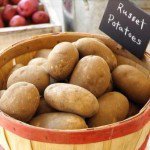 Appearance: medium to large, oblong or slightly flattened oval, light to medium russet-brown, netted skin, white to pale yellow flesh.
Texture: floury, dry; light and fluffy; hearty skin that is chewy when cooked.
Flavor: mild; earthy; medium sugar content
Preferred uses: baking, frying, mashing, roasting
Russets are ideal for light and fluffy mashed potatoes. They also fry up crisp and golden brown, and they are the potato of choice for baking. The delicate flavor and fluffy texture of baked russets pair well with a range of toppings, from traditional sour cream and chives to spicy, bold Mediterranean or Latin flavors. Try cutting into planks or wedges to make hearty oven-roasted “fries.”
Red Potatoes
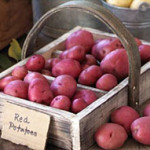 Appearance: small to medium; round or slightly oblong; smooth, thin red skin; white flesh
Texture: waxy, moist, and smooth; creamy
Flavor: Subtly sweet; mild-medium sugar content
Preferred uses: Roasting, mashing, salads, soups/stews
Because of their waxy texture, red potato flesh stays firm throughout cooking, whether roasted or stewed. Their thin yet vibrant red skin adds appealing color and texture to side dishes and salads. Reds are frequently used to make a tender yet firm potato salad, add pizazz to soups and stews, and are served baked or mashed. Round reds are often referred to as “new potatoes,” but the term “new” technically refers to any type of potato harvested before reaching maturity.
White Potatoes
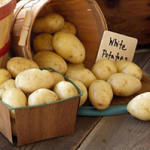 Appearance: small to medium; round to long shape; white or tan skin; white flesh
Texture: medium starch; slightly creamy, slightly dense; thin, delicate skin
Flavor: subtly sweet; mild; low sugar content
Preferred uses: mashing, salads, steaming/boiling, frying
White potatoes hold their shape well after cooking. Their delicate, thin skins add just the right amount of texture to a velvety mashed potato dish without peeling. Grilling whites brings out a fuller-bodied flavor. Create signature potato salads–toss cooked white potatoes with dressings and ingredients “borrowed” from other green salads, e.g., Caesar dressing and grated Parmesan; or ranch dressing, chopped egg, and bacon crumbles.
Yellow Potatoes
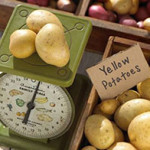 Appearance: marble to large size; round or oblong shape; light tan to golden skin; yellow to golden flesh.
Texture: slightly waxy, velvety, moist
Flavor: subtly sweet; rich; buttery; medium-sugar content
Preferred uses: grilling, roasting, mashing, salads
Grilling gives yellow potatoes a crispy skin that enhances the dense flesh, creating a slightly sweet caramelized flavor. The creamy texture and golden color of yellow potatoes mean you can use less or no butter for lighter, healthier dishes. The naturally smooth and buttery texture also lends itself well to lighter versions of baked, roasted, or mashed potatoes. Simmer yellow potatoes until fully cooked, then drain, chill, and gently “smash” into flat disks. Brown these in oil or clarified butter, then serve as a side or appetizer, topped with sour cream and chives or other garnishes.
Purple/Blue Potatoes
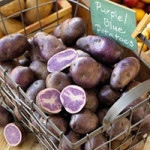 Appearance: small to medium-size; oblong to fingerling; deep purple, blue, or slightly red skin; blue, purple, lavender, pink, or white flesh
Texture: moist; firm flesh. Note–all blue and purple Peruvian varieties have higher starch content and a floury texture
Flavor: earthy, nutty, low sugar content
Preferred uses: roasting, grilling, salads, baking
Most blue/purple potatoes have moist, firm flesh that retains its shape while adding rich, vibrant color and luscious taste to salads. The purple color is preserved best by microwaving, but steaming and baking are also great ways to cook blue/purple potatoes. Because of their mild yet distinctly nutty flavor, blue/purple potatoes naturally complement green salad flavors. Red, White, and Blues—Combine blue potatoes with whites and reds in salads or roasted medleys to make all three colors “pop.”
Fingerling Potatoes
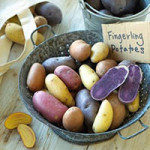 Appearance: 2-4 inches long; finger-shaped or oblong; red, orange, purple, or white skin; red-orange, purple, yellow, or white flesh–sometimes streaked with veins of color.
Texture: waxy, firm, try
Flavor: buttery; nutty; earthy; medium sugar content
Preferred uses: Pan-frying, roasting, salads
Fingerling color and shape are a welcome visual addition to any dish. Pan-frying and roasting enhance their robust flavor and showcase their wonderful nutty or buttery tastes. Consider fingerlings as a change-of-pace foundation for a unique potato salad. Split fingerlings lengthwise and oven-roast to serve as a small-plate or side-dish alternative to fries, with a flavorful dipping sauce, like spicy ketchup, romesco, or sriracha mayo.
Petite Potatoes
 These small, bite-sized potatoes are a grade standard based upon size (“C-size” and smaller, often referred to as pearls or marble-size). They have the same skin and flesh color as their larger cousins, as well as the same shape, texture, and sugar content. Their flavor profile is similar, but more concentrated than that of their larger cousins.
Preferred uses: salads, roasting, frying
Petites make an excellent substitute for pasta, adding nutritional value. Roast a combination of colors for an eye-catching side dish. Their concentrated flavors and quicker cooking time make them an excellent choice for potato salads. Simply toss Petites in olive oil, rosemary, salt, and pepper to create colorful, delicious, and fun roasted potatoes. They save you prep time because they can be prepared and served whole, without slicing or chopping.